
If you need to inspect a boat hull or the base of a bridge today, you’re likely to use decades-old methods. Divers or remotely operated vehicles will do their best under challenging conditions, but murky visibility and no GPS mean imprecise data, text-based reports, and a high price tag.
“In working locks, ports, and dams, it’s very common to have less than two feet of visibility,” explains Zoe So. “Divers sometimes can’t even see their hand in front of their face, so a lot of inspections are currently done through touch and feel and measuring with body parts.”
She’s the product manager at Aquatonomy—a bluetech startup bringing robotics, 3D modeling, and AI analytics to underwater asset monitoring.
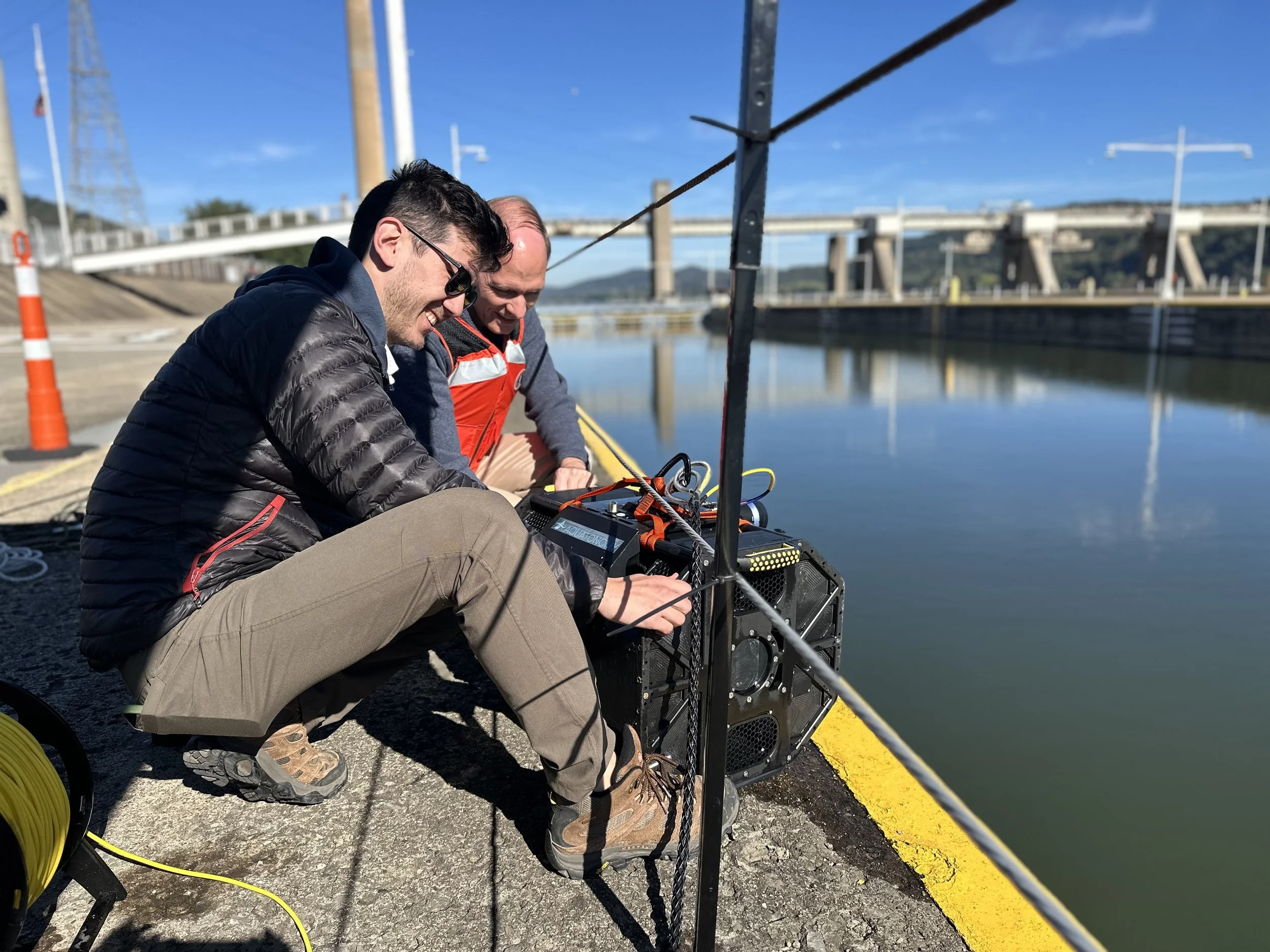
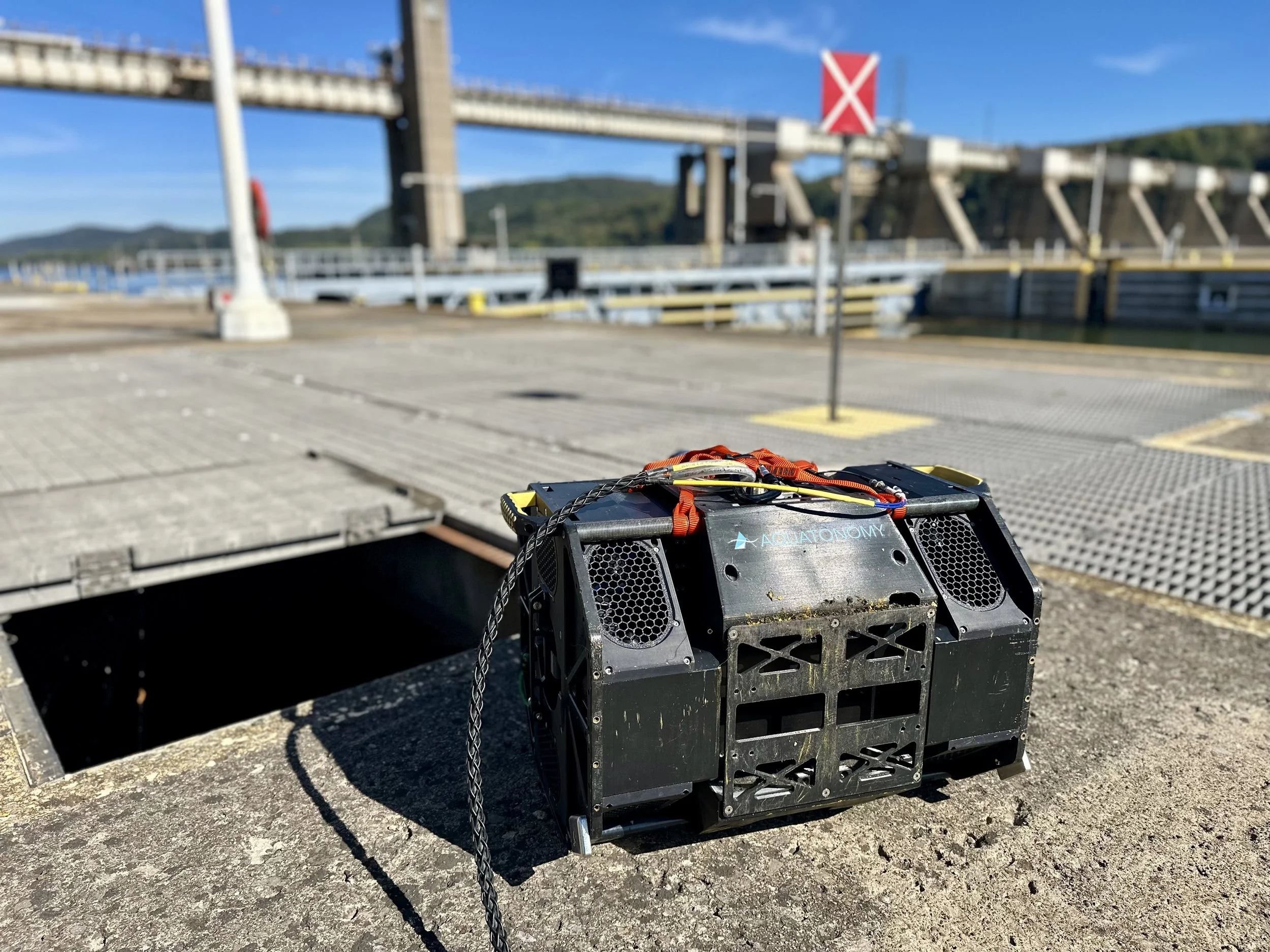
Serving ports and coastal infrastructure, ships and shipyards, dams, locks, and hydropower facilities, Aquatonomy’s autonomous robots operate in low-visibility water using sonar- and camera-based sensors. The sonar is accurate to the sub-inch, and the camera imagery (which improves on current methods by keeping track of exactly where each image is located in the whole) is accurate to the millimeter level, according to the startup.
Aquatonomy takes this sensor data and creates 3D visual models, known as digital twins, to give owners and operators a holistic view. AI-based data trackers compare the digital twins over time, highlighting what’s changed and upcoming risks.
“If we do a scan on bridge piling, for example, and discover there are 20 cracks, six months later we can do another scan, and our AI will help to automatically identify the development of these cracks,” says Xiaoyu Kaess, Aquatonomy’s co-founder and COO. “And then through that information, we review whether there's a structural pattern that engineers need to pay attention to.”
These insights help owners and operators shift from reactive to proactive maintenance—which can slash long-term costs by up to 80 percent. Repairing is also much more sustainable than rebuilding (consider the climate impact of concrete alone), and as global warming brings more severe weather and warmer seas, experts expect increased strain on coastal infrastructure.
Aquatonomy participated in this year’s SeaAhead Pilot program and secured a pilot with the United States Naval Shipbuilding Museum following the program’s pitch event. “After I did my pitch, Margaret Laforest, who runs the museum, came up to me and said, ‘I would love to have you scan our ship,’” So says.
The pilot will give the museum a holistic understanding of the USS Salem’s hull, necessary maintenance, and how low tide impacts the ship.
“The USS Salem is the world's only preserved heavy cruiser and operates as a museumship in Quincy, where she was built 77 years ago,” explains Laforest, the museum’s president. “She was last dry docked in 1999, and we have the manual hull thickness data. Divers were given that schematic and asked to take gauges at similar locations in 2022. We now have the digital data to compare, which provides us with more accurate data points that can be matched up going forward. We appreciate the opportunity to work with Aquatonomy and new technology, which we wouldn't otherwise afford as a small nonprofit.”
“All of the sessions were really helpful—we’re entering into the contracting stage with another client that we met through SeaAhead, so I'm currently going back to our contracting week of the SeaAhead Pilot program to review all the materials that we got from the organizers to prepare for this negotiation phase,” So adds.
The eight-person, seed-stage startup will spend the next year scaling its work with customers and fine-tuning its operational model.
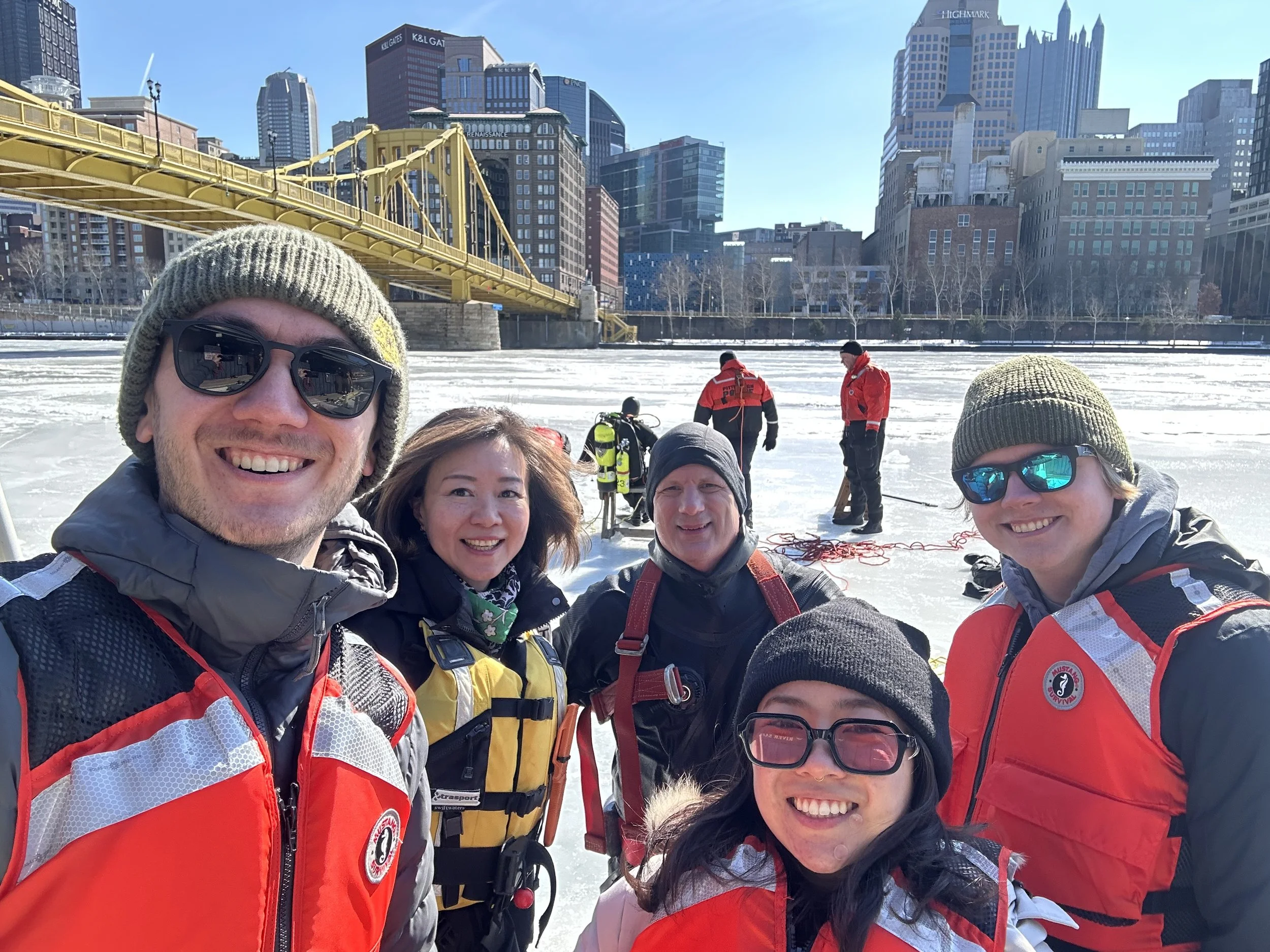
The Aquatonomy team
