
October 2026 Newsletter
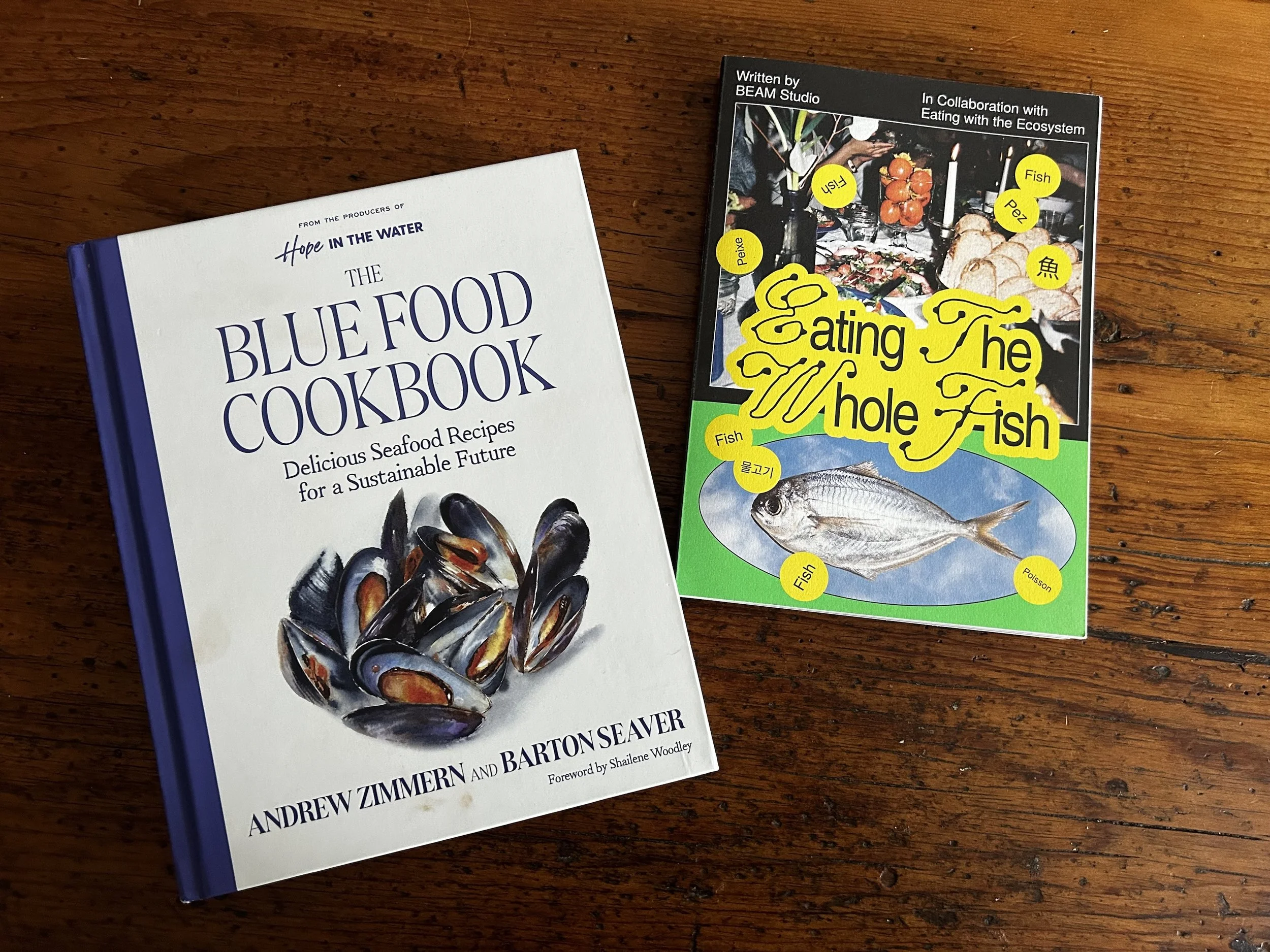
This month, our CEO Alissa Peterson shares what a Climate Week NYC dinner, a pot of mussels, and a Rhode Island cookbook taught her about inspiring the next generation of ocean innovators:
During Climate Week NYC, I attended The Living Table: Oceans Edition, co-hosted by our friends at Lonely Whale. It was a different kind of event from the usual Climate Week fare. Still built around celebrating and accelerating ocean solutions, it brought together an unlikely cast of characters: investors and startups, but also Native fishermen from Alaska, activists, journalists, and filmmakers, including the team behind PBS's Hope in the Water docuseries. Food was the common thread, and it gave people who rarely sit together a focus for conversation.
Food is how most people connect to the ocean, and culture is how a new idea reaches a wider audience. The next generation of ocean innovators will include people who first cared about the sea at the dinner table, and if we are going to grow our community, we need to reach people where they are and inspire them to join us.
News from SeaAhead
ICYMI: In September, SeaAhead announced our first venture fund, which will invest in up to seven bluetech startups over the next year. The SeaAhead Ventures Launch Fund will invest primarily in pre-seed and seed-stage companies across key ocean-innovation areas.
SeaAhead's 2025 impact report is now available (a little later than we might aspire to—but it’s been quite a year!). Check it out for details on our work across creating a new program centered on pilots, deploying capital to the best bluetech startups, creating a comprehensive ocean tech venture database, and more.
SeaAhead Startups’ News
BlueSonde raised $1.74M in new funding, including a $1.3M pre-seed round, for its real-time water-monitoring platforms.
SeaTrac deployed its solar-powered, uncrewed autonomous vehicles this summer with California State University Long Beach's Shark Lab.
BeeX has been named a winner of the Mine Countermeasures Modernization Prize Challenge for its autonomous underwater drones and will advance toward integration with the U.S. Navy.
Robosys Automation successfully validated its autonomous navigation system against 55 industry benchmarks through testing at the Maritime Research Institute Netherlands.
Radmantis has been chosen by the U.S. Department of Energy to test whether mechanically guided fish entrainment improves AI-based selective fish passage at hydropower facilities. This work moves toward dams that let native fish migrate past while keeping invasive species out.
Laminar, developer of water-saving physical AI tech for automated factories, was named the Association for Dressings and Sauces’s 2026 Supplier Partner of the Year in the Equipment and Service category.