
What a Climate Week dinner, a pot of mussels, and a Rhode Island cookbook taught me about inspiring the next generation of ocean innovators
On Monday of Climate Week NYC, I attended The Living Table: Oceans Edition, co-hosted by our friends at Lonely Whale. It was a different kind of event from the usual Climate Week fare. Still built around celebrating and accelerating ocean solutions, it brought together an unlikely cast of characters: investors and startups, but also Native fishermen from Alaska, activists, journalists, and filmmakers, including the team behind PBS's Hope in the Water docuseries. Food was the common thread, and it gave us all a focus for conversation.
Our chef was David Standridge of The Shipwright's Daughter in Mystic, CT, a tide-to-table restaurant that works with local growers and fishermen and changes its menu daily around what New England is producing. The restaurant's own philosophy is that connection through food can transform our environment and our communities. The event included a wide range of what can be harvested and farmed in the ocean, and for me the most memorable dish was slipper limpet, a type of mollusk I'd never even heard of. It was surprisingly good, sliced into coins, and not as chewy as I expected from looking at it.
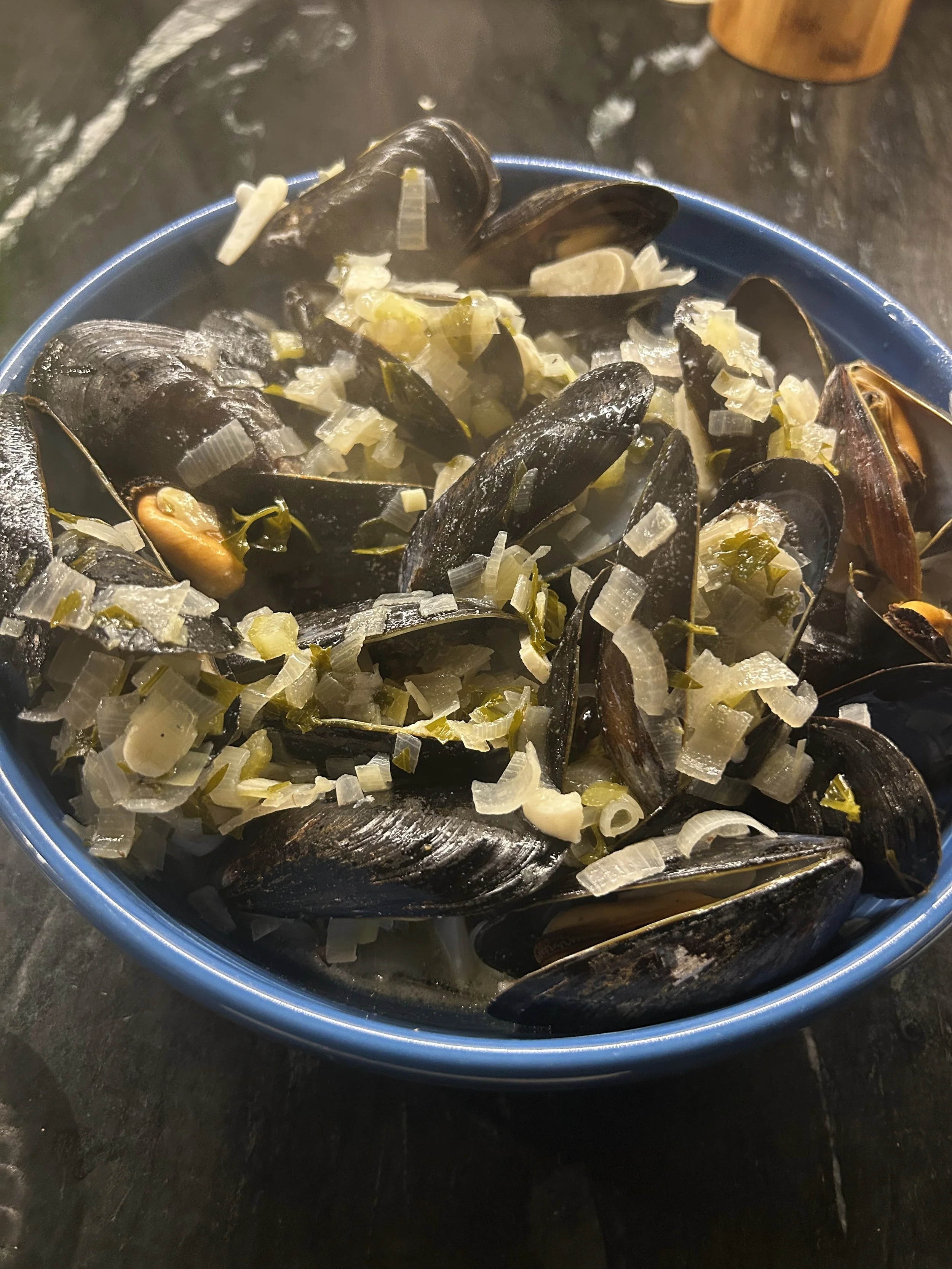
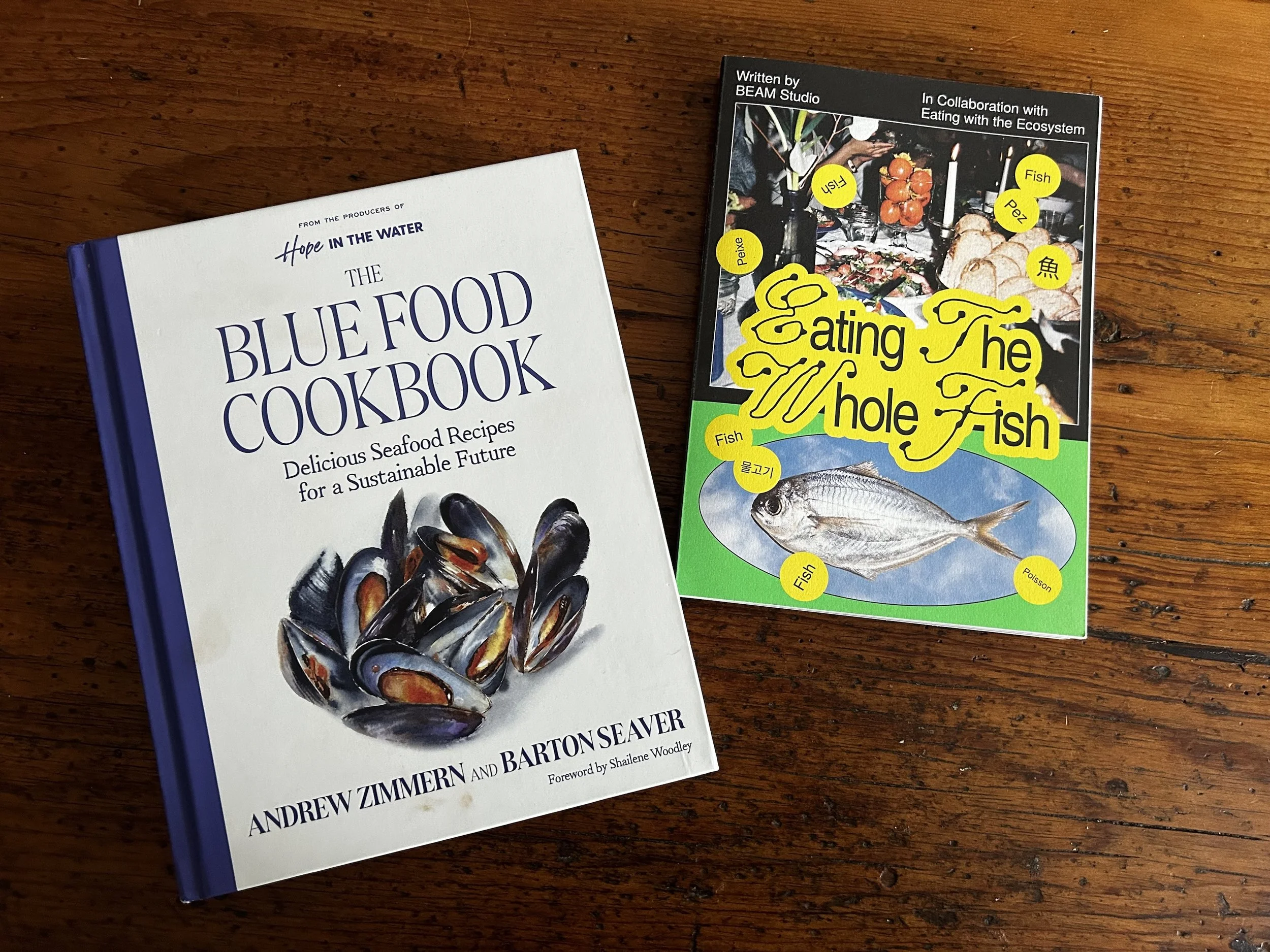
Back home the next week, I flipped through The Blue Food Cookbook, which was produced and given to us by the team from Hope in the Water, and selected the moules marinière recipe. I can confirm this classic recipe was delicious, and even my 10-year-old could have finished the whole thing himself. Over dinner, my family talked about the impact of what we choose to eat. In terms of climate impact, mussels are among the lightest-footprint proteins you can eat: they need no feed, and they filter the water around them. It was a small moment, but it made something clear to me. Innovation is the easy part. Getting people to care is harder, and a good meal is a solid way in.
Funny enough, that cookbook was not the only seafood cookbook I acquired in September. Eating the Whole Fishcomes from BEAM Studio, a creative studio and research collective working across science, technology, ecology, and culture, and was developed with non-profit Eating with the Ecosystem. The 200-page cookbook and field guide is designed to teach Rhode Islanders to cook the local seafood they overlook. The BEAM team highlights that the idea for the book was launched when they learned a key number: Rhode Island exports 95% of the fish it catches. The flip side shows up nationally: most of the seafood Americans eat is imported, by estimates ranging from 65% to 90%. So wherever you live, this story is probably close to home.
For SeaAhead, this book is also personal. BEAM co-founder Zoe Lee first got involved in the blue economy through our BlueGreen Innovation Challenge, which ran in 2021. At the time, Zoe was a RISD student on the winning team, whose idea was shellfish farming on the Block Island Wind Farm, using the turbine bases for multi-trophic aquaculture. Annie Chen, her future BEAM co-founder, consulted on the project in its final year. While the project itself didn't work out, the experience did its job. Zoe says the Challenge "really opened the door for me to engage with the blue economy as a designer," and she credits much of what she has done since to that first opportunity.
Eating the Whole Fish is a product of that journey. Zoe and Annie founded BEAM in 2024, and it has grown into a creative studio working with frontier technology companies on new forms of science storytelling. With a new NOAA Saltonstall-Kennedy grant, they are now expanding programming around the book with Eating with the Ecosystem, while Zoe continues her research at the MIT Media Lab.
The BlueGreen Innovation Challenge was designed to "inspire the next generation to focus on solving problems that really matter." It's a long game, and you never know where a goal like that will take you. Zoe credits the Southern New England blue economy community for "taking a chance on us as young designers," and BEAM is now bringing more people into the conversation through food and storytelling. The next ocean innovators will include people who first cared about the sea at the dinner table. To grow our community, we need to reach people where they are and give them a way to join us.
So while you think about how we reach people beyond our own waters, try cooking something local.
Eating the Whole Fish is out now, and you can order it at wholefish.earth.