
EvoNatura Combats Pollution with Plastic-Eating Microbes
Compostable plastics are often marketed as a solution to pollution, but many fail to reach industrial composting sites. Instead, they persist in the environment, unable to break down naturally.
EvoNatura, a mother-daughter-led startup and recent BlueSwell graduate, is tackling this issue by engineering plastics to degrade in any environment. Its proprietary drop-in microbes enable manufacturers to meet compliance standards by ensuring biodegradation—even if the plastic ends up in nature rather than a specialized facility.
EvoNatura was recently awarded a $20,000 prototyping grant from the Massachusetts Clean Energy Center (MassCEC) through SeaAhead and is poised for growth. We sat down with co-founders Priyanka Naithani and Alka Naithani to discuss their technology, its impact on oceanic pollution, and their path to commercialization.
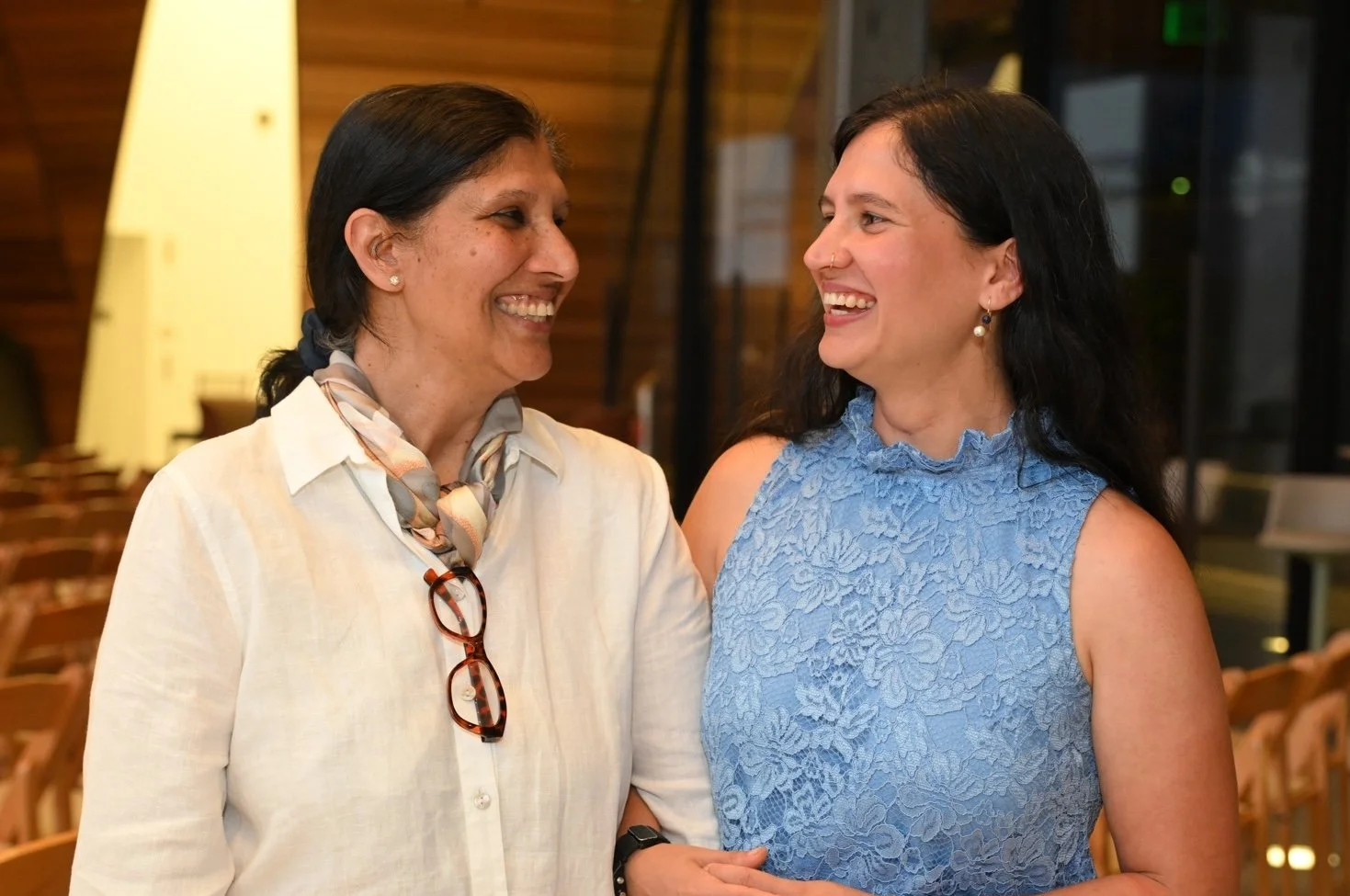
Alka and Priyanka Naithani, the mother-daughter team behind EvoNatura.
Tell us about yourselves and why you founded EvoNatura.
Priyanka Naithani: EvoNatura was born from a desire to create a positive environmental impact. The mission became deeply personal after the passing of my grandfather, who entrusted me with his environmental legacy.
In his honor, we officially registered the business and accelerated our efforts. While our initial 2024 proof-of-concept involved a new bioplastic formulation, we have since narrowed our focus. Between 2025 and 2026, we refined and validated a "drop-in" additive that integrates into existing manufacturing lines without requiring equipment changes. This focus has brought significant clarity to our R&D and commercial strategy.
Alka Naithani: My father, formerly the advocate general of Uttarakhand in northern India, was a staunch environmental advocate. In our fragile mountain hometown of Nainital, he championed and passed the region’s first single-use plastic ban—legislation that remains in effect today.
PN: His vision in 2002 was ahead of its time, anticipating the global regulations we see today. We founded EvoNatura to keep that legacy alive.
With my background in chemistry, I began researching alternative materials. I discovered that most "compostable" plastics only degrade in highly specialized industrial facilities. If a compostable bag doesn't reach one of these sites, it won't break down.
This led us to a new approach: using nature’s most effective decomposers. By embedding microbes directly into compostable plastics, we ensure they break down from the inside out.
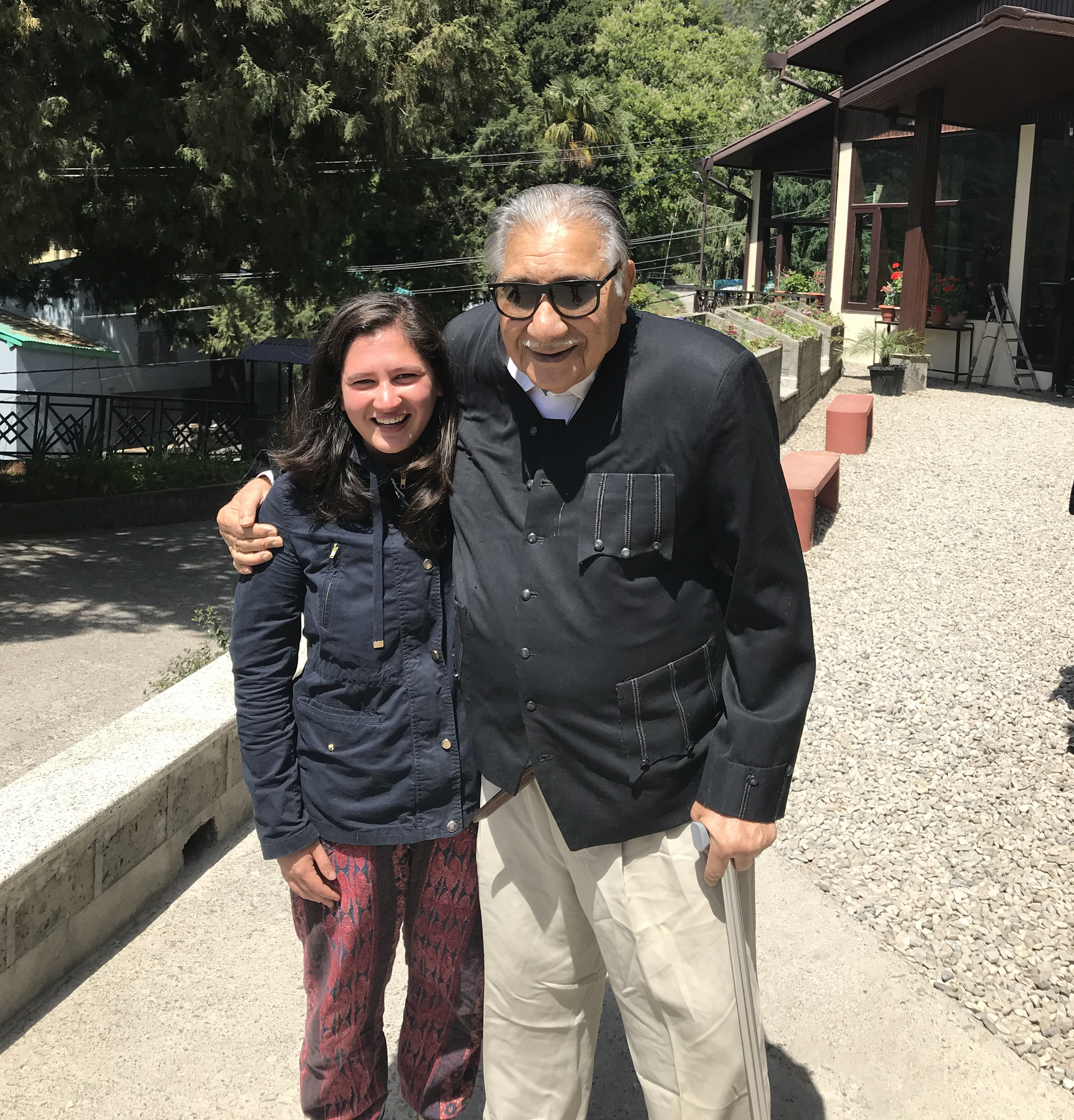
Priyanka Naithani with her grandfather.
What's the simplest way you can explain how your tech works?
AN: Our technology mimics the human digestive system. Microbes remain stable and encapsulated until they encounter the specific environment that triggers the release of enzymes. These enzymes then digest the bioplastic, similar to how the body processes food.
Who are the customers for this technology?
PN: We produce the additive—the encapsulated microbes—rather than the plastic itself. We partner with plastics producers to help them meet increasingly stringent global compostability and compliance standards.
What stage is the company now?
PN: We are currently at Technology Readiness Level 5, having transitioned from benchtop to pilot scale. We are actively validating our technology on manufacturers' production lines and project a 2027 launch with full certifications.
Notably, we are fully bootstrapped. We’ve taken a lean approach to biotech, prioritizing strong partnerships and purchase orders over traditional venture funding.
You recently received a $20k prototyping grant from MassCEC through SeaAhead. What is that going to enable for you?
PN: This grant allows us to optimize our technology through critical partnerships. We are working with UMass Lowell and UMass Dartmouth to conduct standardized ASTM biodegradation testing in marine environments. This is a vital opportunity to prove our effectiveness in oceans, where traditional compostable plastics currently fail to degrade.
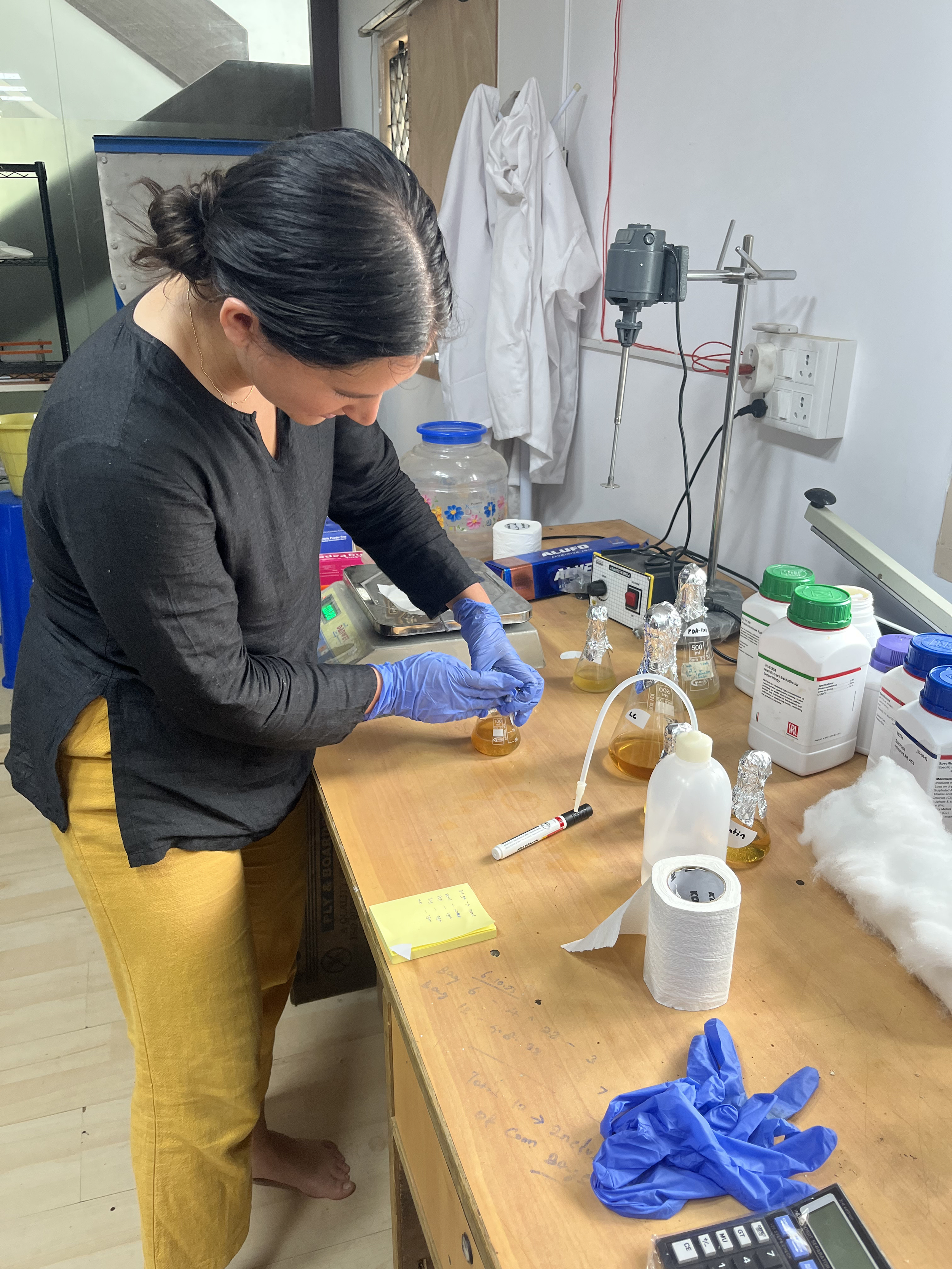
Priyanka Naithani, CEO, in the lab.
What are your top priorities for the next year?
AN: Our immediate goals are to secure three additional pilots by year-end and achieve ASTM certification for home composting. Ultimately, we aim to convert these pilot programs into long-term commercial partnerships.
You just graduated from BlueSwell’s most recent cohort. What was your experience, and how has it helped shape EvoNatura's trajectory?
AN: BlueSwell was instrumental in connecting us to the Massachusetts ecosystem. The program provided essential expertise in IP, marketing, and finance, helping us navigate the complexities of scaling a startup.
PN: The BlueSwell Demo Day was also a highlight, allowing us to engage with climatetech experts and corporate partners like Massport. These connections are invaluable as we move toward commercialization.
